Start Rowing
Rowing, Coxing or both?
There are two entry points into rowing you can take, both of which we cater for as a rowing club internally using highly trained coaches and to GB Rowing’s standards. You can learn to row, or you can learn to cox - become a coxswain
Learn to Row
Evesham Rowing Club runs Learn to Row courses for both adults and children. As a club we tend to focus on beginner courses, but can provide improvement courses for all levels of experience and ability.
Adult courses
Adult Learn To Row courses are 1 session per week for 12 weeks £120.
For upcoming dates and more information, please email the rowing coaches HERE
Junior courses 2026
Course details and registration form can be found here: 2026 Junior Learn to Row
Temporary Membership
For insurance purposes all those attending a course must become a temporary member of the club. Please email us to request the form:
Learn to Cox
Coxes are a vital part of any rowing club and we are always keen to welcome new ones. You don’t need to have any prior knowledge or experience, we can give you all the training you need.
You’ll be taught how to steer a boat and control your crew, by working with the coaches you’ll learn about rowing technique but a key skill you’ll need is the ability to motivate and lead your crew.
If you are interested please contact us to find out more and to arrange a taster session.
A Coxing Membership is free and there is no fee for the training.
You can also email rowing@erc.club for more details or to book a place on the next course.
What is Rowing?
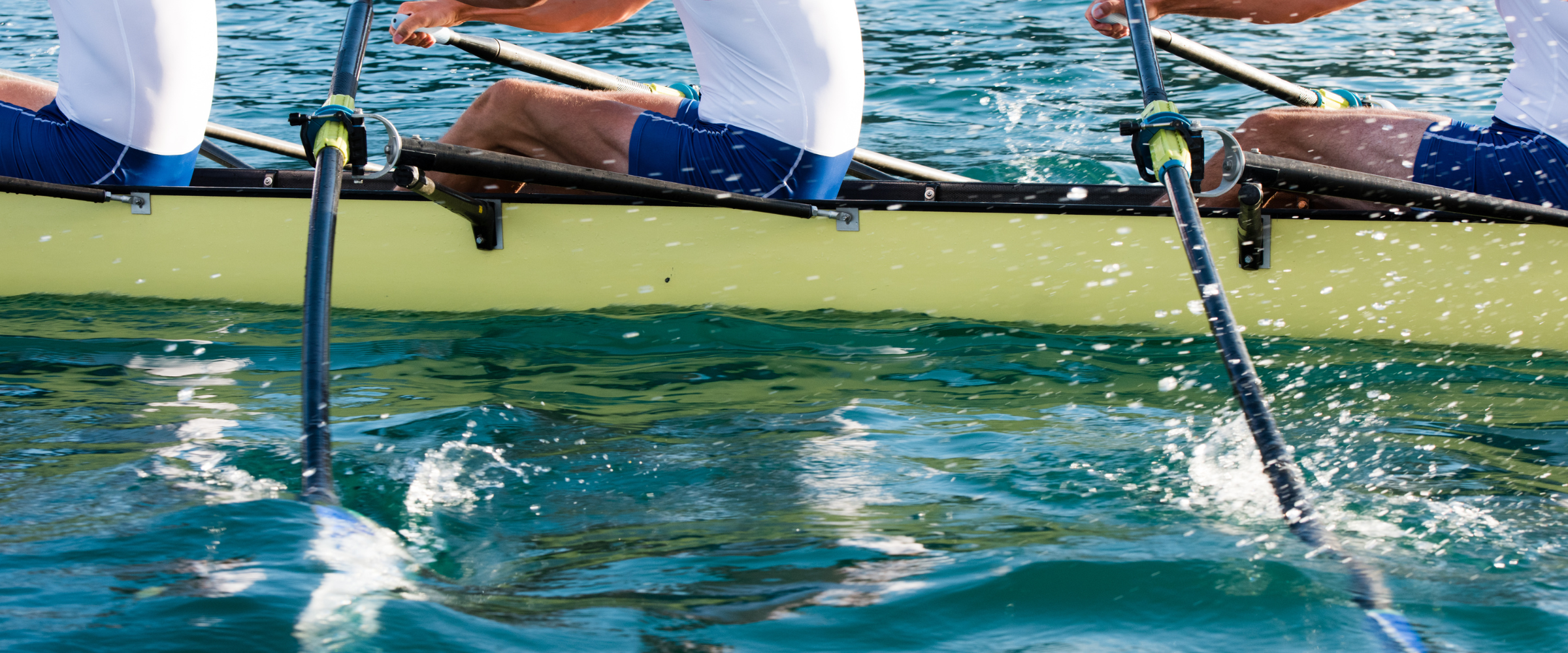
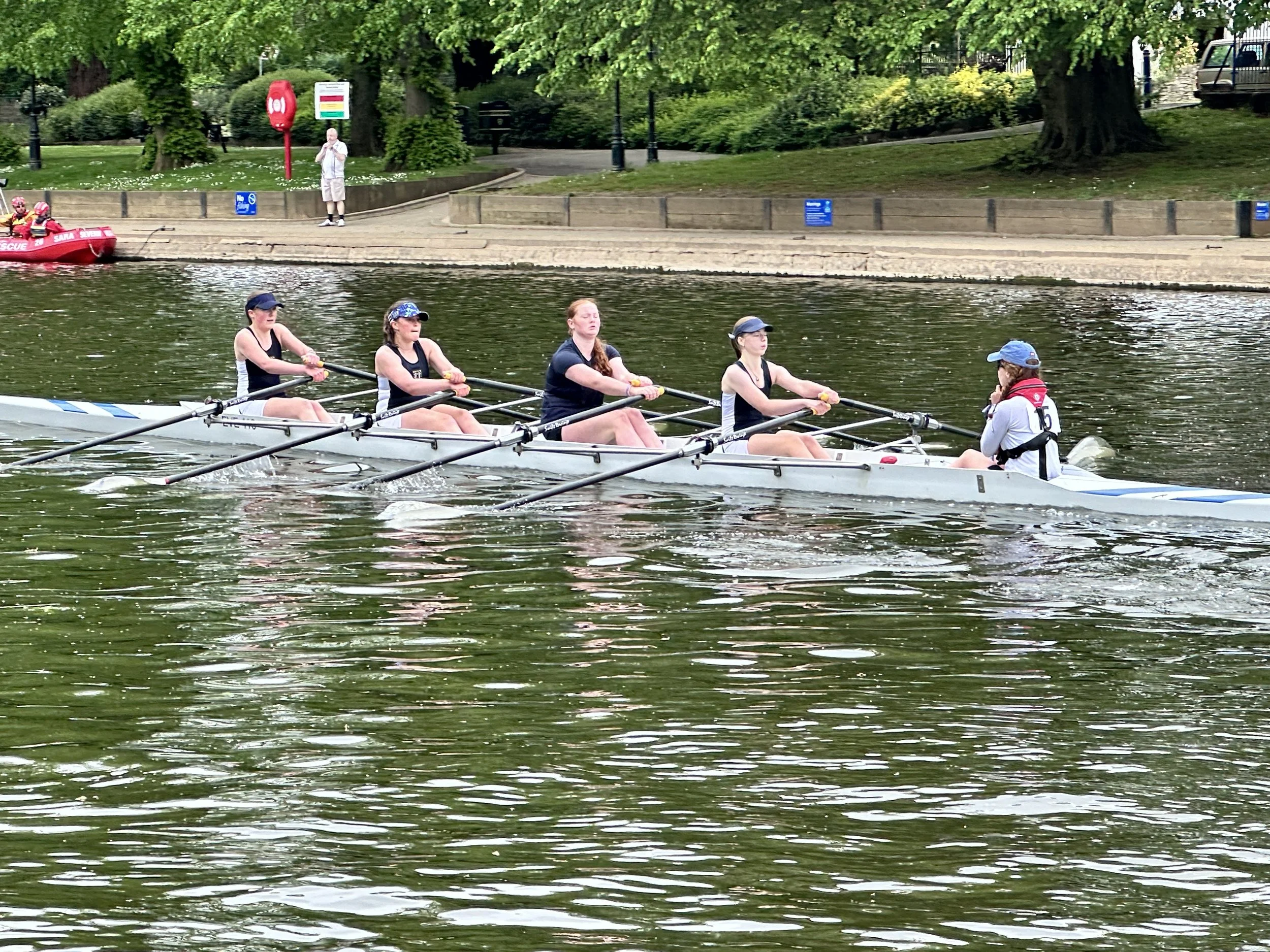
Rowing is a sport in which athletes propel a long, narrow boat across water using oars or ‘blades’. Unlike most sports, rowers sit facing backwards and use their legs, core, and arms in a smooth, coordinated motion called a stroke. Each stroke repeats the same simple sequence—placing the blade in the water, driving the boat forward with the legs, and then gliding smoothly back to start again. When done well, rowing appears calm and rhythmic, but it is one of the most physically demanding and effective full‑body sports in the world.
Rowing can be done solo or in teams, with boats ranging from single‑person sculls to eight‑person shells. In some boats, a coxswain steers and calls instructions, allowing the rowers to focus on timing and power. Rowing is raced primarily on rivers, lakes, or purpose‑built courses, with the Olympic standard distance being 2,000 metres
What does a ‘cox’ do?
Think of the cox as the driver, navigator, and on‑board coach of a rowing boat.
While the rowers provide all the physical power, the cox is responsible for making sure that power is used in the best possible way.
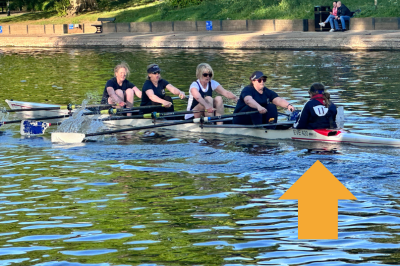
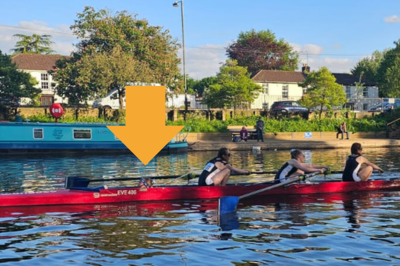
Not all rowing boats have coxes; fours and eights have them and the cox can sit facing the crew in the stern watching the direction of travel or what’s called a bowloader and the cox sits behind the crew in the bow facing direction of travel.
What is Club Rowing?
Club rowing is the most common way people experience the sport. Rowing clubs are community‑based organisations that welcome complete beginners as well as experienced athletes. Beginners usually start on rowing machines - know as ergometers or “ergs” - before moving onto wide, stable boats on the water, learning the basics of technique, safety and teamwork. No prior experience is needed, and most clubs run structured “Learn to Row” programmes taught by highly qualified coaches.
One of rowing’s greatest strengths is its inclusivity. People of all ages and fitness levels take part, with categories ranging from juniors to masters, and opportunities for recreational rowing, racing and high‑performance competition. Club rowing is also highly social - training and improvement happen as a group, and success depends on rhythm, trust and working together as one crew rather than individual ability alone.
Ten things to know…
… for a Beginner Rower:
1. Stroke
This is one full rowing movement - from placing the blade in the water, pulling, and then returning ready for the next one.
You don’t “pull once” - you take a stroke.
2. Blade
The flat part of the oar that goes into the water.
Rowers don’t say “paddle” - it’s a blade.
3. Catch
The moment your blade enters the water at the start of the stroke.
A good catch is quick, clean, and quiet.
4. Drive
The power part of the stroke, where you push with your legs, swing your body, and pull with your arms.
This is where the boat actually moves.
5. Finish
The end of the stroke, when you pull the blade out of the water and prepare to go forward again.
Clean finishes make the boat feel smooth.
6. Recovery
The relaxed, controlled movement forward after the finish, sliding back up the seat.
Rowing is hard on the drive, calm on the recovery.
7. Stroke Rate
How fast the crew is rowing, measured in strokes per minute.
Higher rate = faster rhythm, not always more effort.
8. Bow / Stern
Bow = front of the boat (the direction it travels)
Stern = back of the boat
You row facing the stern, but move toward the bow.
9. Sculling
Rowing with two small blades, one in each hand
(e.g. single, double, quad)
10. Sweep
Rowing with one larger blade held with both hands
(e.g. pair, four, eight)
… for a Beginner Cox:
1. Cox
The person who steers the boat, calls commands, motivates the crew, and keeps everyone safe.
You don’t row - you run the boat.
2. Seat Numbers
How rowers are numbered in the boat:
Stroke seat = closest to the stern, sets the rhythm
Bow seat = closest to the bow
Seats are counted from stern to bow.
3. Stroke Seat
The rower whose timing the crew follows.
Your job is to sync the boat to the stroke.
4. Rating (or Rate)
Shortcut for stroke rate.
“We’re at rate 20” = 20 strokes per minute.
5. Pressure
How hard the crew is rowing, separate from rate.
You can row light or heavy at the same rate.
6. Power Ten / Push
A call for the crew to apply extra effort for a short period, often 5–10 strokes.
Used to gain distance or respond to another boat.
7. Rudder
The steering fin underneath the boat that the cox controls.
Small movements - big effects.
8. Hold It Up
A command to stop rowing immediately.
Often used for safety or instructions.
9. Steady
A command meaning row calmly at a consistent speed, often after a hard effort.
10. Line
The path the boat takes down the river or course.
A good line is short, straight, and fast.